


Brazilian recipe
Authentic Brazilian Feijoada: A Classic Homemade Feast
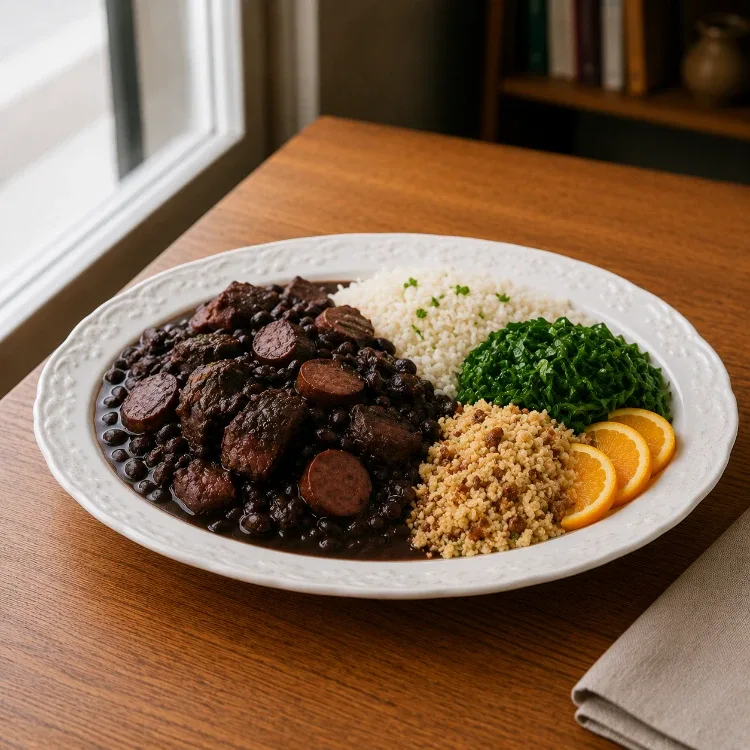
Learn how to master an authentic feijoada, featuring tender pork cuts, a rich dark broth, and creamy black beans. This is your definitive guide to an unforgettable Brazilian comfort meal.
0.0 / 5 by 0 Reviews
Ingredients
1/2 orange, skin-on
400 g pork spare ribs, cubed and desalted
150 g bacon, cut into pieces
300 g fresh or desalted pork loin, cut into pieces
2 paio sausages
1 onion, chopped
1 bunch fresh parsley, chopped
2 linguiça calabresa sausages
1 pork knuckle, desalted
400 g pork tail, desalted
1 kg black turtle beans, soaked for at least 4 hours
2 bay leaves
1 pig's trotter, desalted
300 g carne-seca (dried salted beef), desalted
400 g pork ear, desalted
3 cloves garlic, roughly chopped
Where to find ingredients
To prepare this authentic dish in the Federated States of Micronesia, you will likely need to visit specialty or larger grocery stores that carry international or canned imports. Black beans are commonly found in the canned or dry bean aisle of major island supermarkets. For specific Brazilian ingredients like 'carne-seca', 'paio', and 'linguiça calabresa', search for specialty shops or butchers that stock cured or artisanal sausages; if unavailable, use high-quality smoked sausage (like kielbasa) as a substitute for the linguiça and extra-salty cured beef or even prosciutto ends as a stand-in for the dried beef. Pork cuts like ears, tails, and knuckles can often be ordered through local island butcher shops or sourced from larger frozen meat distributors. If fresh herbs like parsley are scarce, dried herbs are a fine pantry-stable alternative.
Preparation method
- Make sure all salted meat cuts have been properly soaked in water to remove excess salt before starting
- In a large heavy-bottomed pot, sear the pork loin and spare ribs until golden brown for about 6 minutes
- Remove the seared meat and set aside
- In the same pot, fry the bacon until crispy and it has rendered its own fat
- Add the onion to the bacon, sautéing until translucent while scraping the bottom of the pot to lift the flavorful browned bits
- Toss in the garlic and bay leaves, sautéing for another 5 minutes
- Stir in the drained black beans and mix thoroughly
- In a separate pot, parboil the tougher meat cuts (trotter, knuckle, tail, ear, and dried beef) to remove any impurities
- Drain the parboiled meats and transfer them into the main bean pot
- Cover everything with water, adjust the salt level, and bring to a boil over high heat
- Lower the heat to a simmer, partially cover, and cook for 3 hours, skimming off any foam that rises to the surface
- After 1 hour and 15 minutes, pull out the dried beef, slice it into cubes, and set aside
- Once the cooking time is nearly up, stir in the reserved pork loin and spare ribs, the parsley, and the half-orange
- After another 30 minutes, fish out the orange pieces and discard them
- Once the pork loin is tender, remove it from the pot, slice into cubes, and set aside
- Simmer the sausages whole for 15 minutes, then slice them into rounds and return to the pot
- Fold the reserved cubed beef and loin back into the mix, letting everything simmer together until the beans are creamy and the broth has thickened nicely
- Add boiling water as needed throughout the cooking process to keep the ingredients submerged
Observations
Feijoada stands as the ultimate icon of Brazilian home cooking, marrying the heartiness of assorted pork cuts with the deep, earthy flavor of slow-cooked black beans. This method focuses on patient, low-heat simmering to ensure each ingredient reaches the perfect texture while the broth develops its signature velvet consistency. It is a dish that celebrates tradition, perfect for large family gatherings that call for a comforting, robust, and soulful meal.
Ratings and comments