


Brazilian recipe
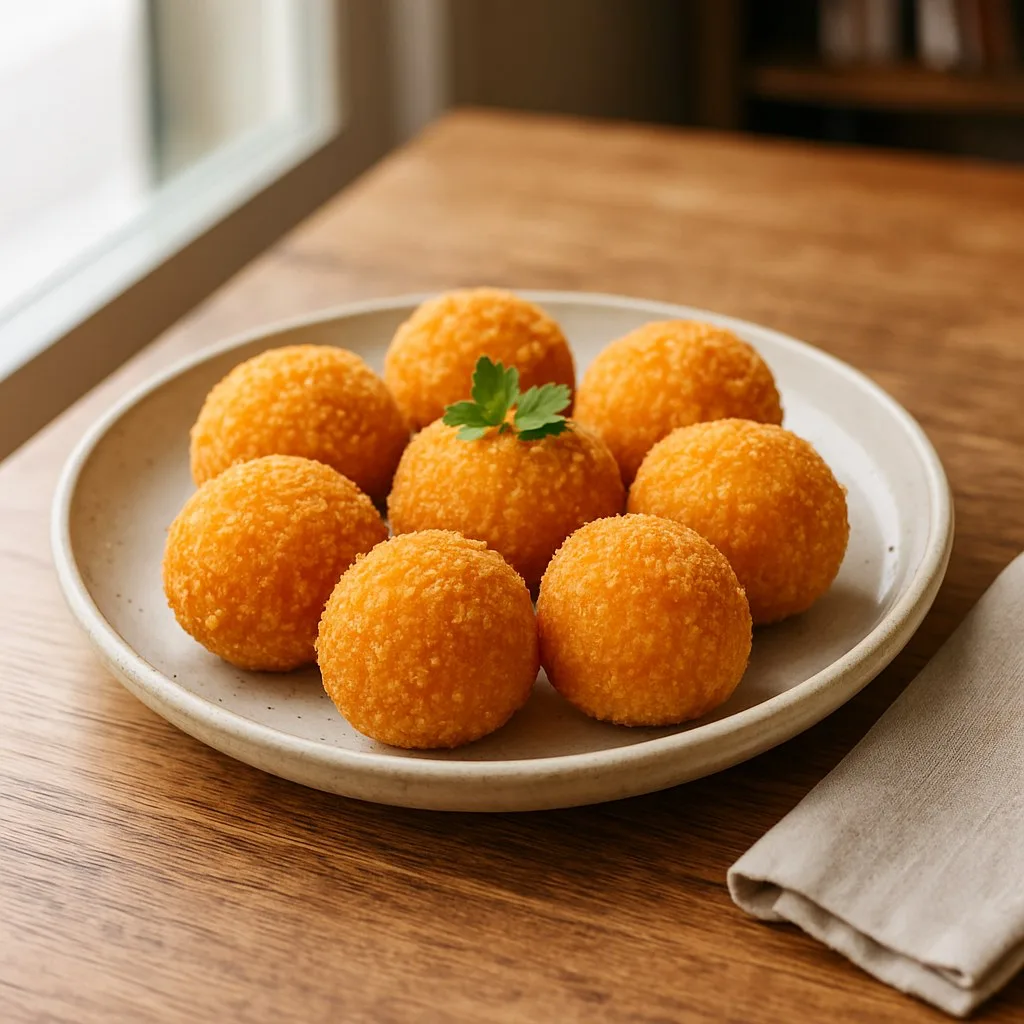
Traditional Four-Cheese Balls (Bolinha de 4 queijos)
A faithful Brazilian recipe for traditional four-cheese balls, adapted into natural English while preserving the original ingredients and method.
0.0 / 5 by 0 Reviews
Ingredients
3 whole eggs
300 g of mozzarella cheese grated
Plain flour (approximately 1 cup)
300 g of plate cheese grated
150 g of grated Parmesan cheese
300 g of cheese fresco or meia cura grated
300 g of mozzarella cheese grated
Plain flour (approximately 1 cup)
300 g of plate cheese grated
150 g of grated Parmesan cheese
300 g of cheese fresco or meia cura grated
Where to find ingredients
Find Brazilian ingredients such as requeijão, Catupiry, palmito, goiabada, dendê oil, cassava flour, cachaça, carne seca, moranga squash, cação and farinha láctea in Brazilian or Latin American grocers, international food shops, larger supermarkets and online speciality grocery sections. Standard meat, seafood, dairy, produce and baking ingredients are usually available in supermarkets, butchers, fishmongers and local grocery shops. Substitutes, only if needed: cream cheese for requeijão or Catupiry, firm white fish for cação, and butternut squash for moranga.
Preparation method
- Rale todos the cheeses and mix-the in the bowl
- Add the whole eggs à mixture of cheeses and stir bem ate form the dough smooth
- Add the plain flour gradually, ate the dough ficar consistente to modelar
- Shape pequenas bolinhas with the mathe
- Coat cada bolinha in the clara of egg to ajudar in the aderência of the flour
- Empane the bolinhas in the plain flour or breadcrumbs, cobrindo-the completamente
- Heat oil suficiente to fritar the bolinhas in medium heat
- Fry the bolinhas ate that estejam douradas and crocantes for fora
- Remove of the oil and place sobre papel absorvente to eliminar the excesso of gordura
- Serve hot to melhor sabor and textura
Observations
This recipe keeps the Brazilian identity of Bolinha de 4 queijos, preserving the ingredients, technique and serving idea from the original. It is written for an English-speaking audience with clear cooking language, while keeping cultural items such as requeijão, palmito, goiabada, dendê oil, Catupiry and carne seca when they are part of the dish.
Ratings and comments