


Brazilian recipe
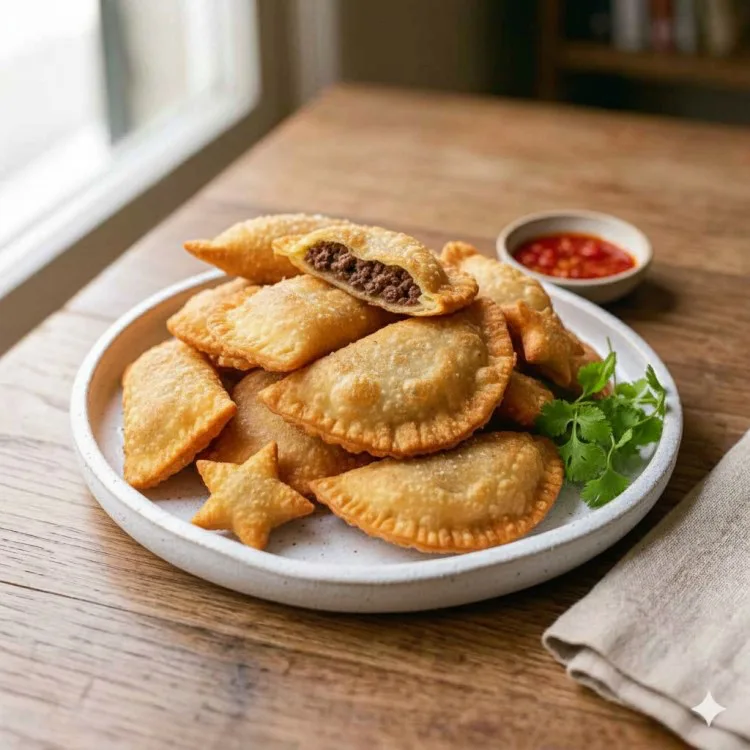
Crispy Homemade Pastel Dough: A Practical Recipe (Massa de pastel)
Learn how to make a dry, crispy homemade pastel dough. With just a few basic pantry ingredients, you can create a thin, versatile pastry perfect for your favorite fillings.
0.0 / 5 by 0 Reviews
Ingredients
1 tbsp salt
200ml warm water
Filling of your choice, already prepared and cooled
2 tbsp vegetable oil or melted lard
1 tbsp white vinegar
500g all-purpose flour
200ml warm water
Filling of your choice, already prepared and cooled
2 tbsp vegetable oil or melted lard
1 tbsp white vinegar
500g all-purpose flour
Where to find ingredients
You can find all-purpose flour, vinegar, and oil in the baking or staples aisles of any local supermarket in the Bahamas. For the lard, check the meat or dairy sections. If you cannot find high-quality lard, vegetable shortening is a common substitute for a crisp texture.
Preparation method
- In a large mixing bowl, combine the all-purpose flour and salt.
- Make a well in the center of the dry ingredients and add the oil (or lard) and vinegar.
- Gradually pour in the warm water while incorporating the ingredients with your hands, until the dough begins to pull away from your fingers.
- Transfer the dough to a smooth, flat surface and knead vigorously until it achieves a soft, homogeneous texture.
- If necessary, adjust the consistency by adding a few drops of water if too stiff, or a dusting of flour if too sticky.
- Cover the dough with a clean kitchen towel and let it rest for 20 minutes.
- Roll out the dough with a rolling pin until it is very thin.
- Cut the dough into your desired shape and size.
- Place a portion of your preferred filling in the center and fold, pressing firmly along the edges to seal.
- Deep-fry the pastéis in hot oil until they are golden-brown.
- Drain the excess oil on paper towels and serve immediately.
Observations
This pastel dough is a classic in Brazilian cuisine, highly prized for its crisp texture and the convenience of being made at home. The secret to a professional result is kneading the dough thoroughly until it is completely smooth and rolling it out with a rolling pin until it reaches a very thin consistency. This technique ensures your pastries come out golden-brown without absorbing excess oil during frying.
Ratings and comments