


Brazilian recipe
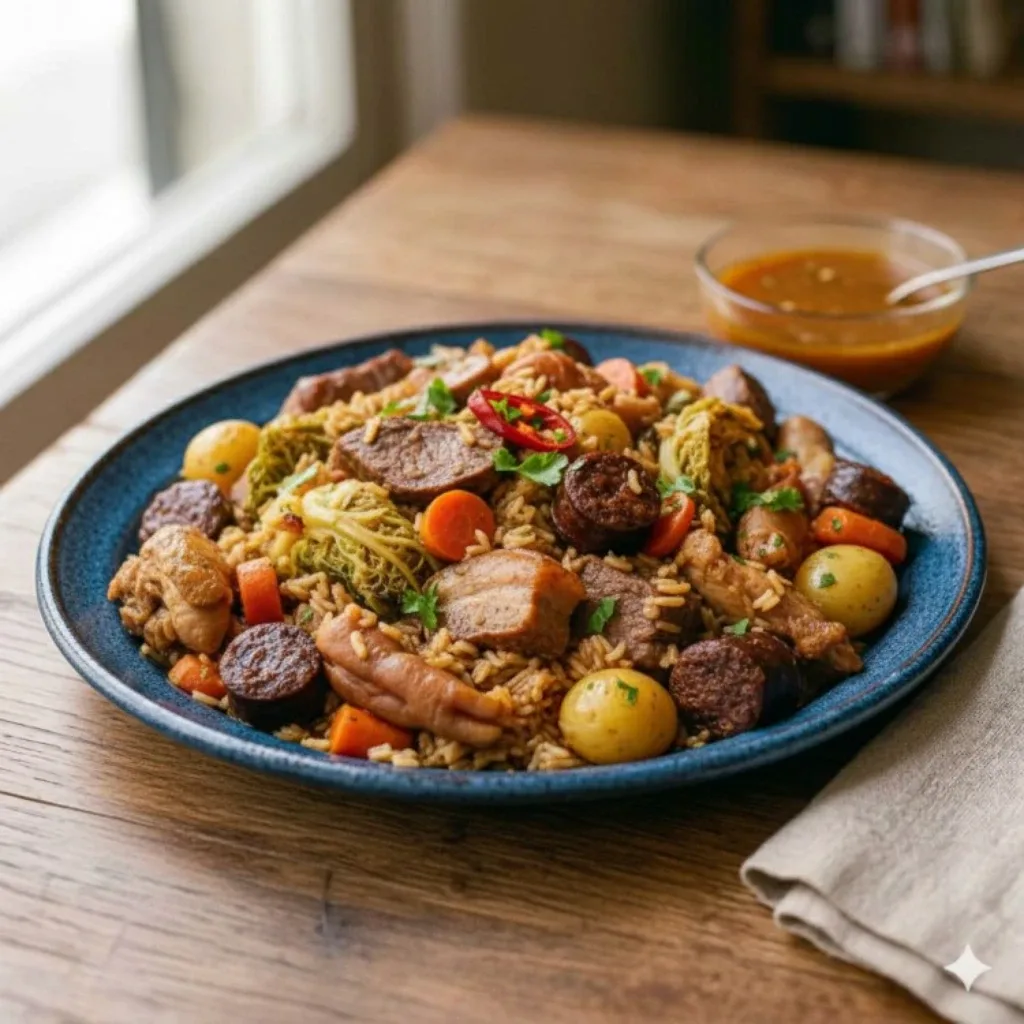
Traditional Homemade Cozido à Portuguesa (Cozido à portuguesa)
A faithful Brazilian recipe for traditional homemade cozido à portuguesa, adapted into natural English while preserving the original ingredients and method.
0.0 / 5 by 0 Reviews
Ingredients
300 g of meat of vaca
6 pedacthe of entremeada of porco
1 orelha of porco
6 fatias of pork loin of porco assado
1 or 2 collard greenss
1/2 galinha
Agua for cozer
Sal
1 chouricthe of meat
1 farinheira
Batatas
Arroz
Cenouras
1 chouricthe of sangue
1 pe of porco
Nabos
6 pedacthe of entremeada of porco
1 orelha of porco
6 fatias of pork loin of porco assado
1 or 2 collard greenss
1/2 galinha
Agua for cozer
Sal
1 chouricthe of meat
1 farinheira
Batatas
Arroz
Cenouras
1 chouricthe of sangue
1 pe of porco
Nabos
Where to find ingredients
Find Brazilian ingredients such as requeijão, Catupiry, palmito, goiabada, dendê oil, cassava flour, cachaça, carne seca, moranga squash, cação and farinha láctea in Brazilian or Latin American grocers, international food shops, larger supermarkets and online speciality grocery sections. Standard meat, seafood, dairy, produce and baking ingredients are usually available in supermarkets, butchers, fishmongers and local grocery shops. Substitutes, only if needed: cream cheese for requeijão or Catupiry, firm white fish for cação, and butternut squash for moranga.
Preparation method
- Take to the heat the pan with water temperada of sal
- Add the meats and Let-the cozer
- À medida that the meats forem ficando cozidas, remove-the and conserve-the in local aquecido
- Apos retirar todas the meats, place the legumes in the pan with the stock of the cooking and Let cozer
- To the preparo of the rice: place in the pan the forcathe of rice desejada
- Add the dobro of the volume of stock of the cooked to the rice
- Take to the lume ate the rice cozer, garantindo that fique seco and solto
Observations
This recipe keeps the Brazilian identity of Cozido à portuguesa, preserving the ingredients, technique and serving idea from the original. It is written for an English-speaking audience with clear cooking language, while keeping cultural items such as requeijão, palmito, goiabada, dendê oil, Catupiry and carne seca when they are part of the dish.
Ratings and comments